Noel Gardner
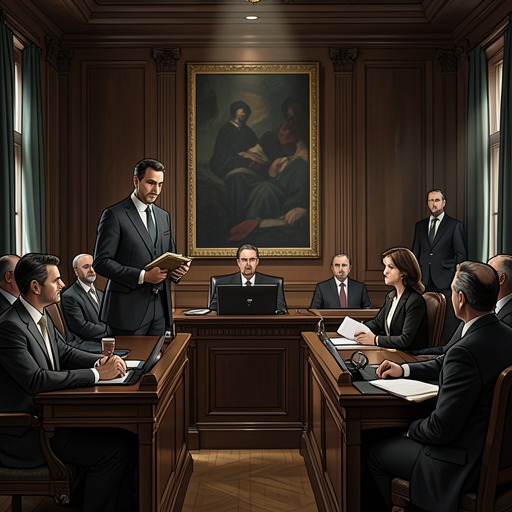
Under the Banner of HeavenNoel Gardner was a psychiatrist affiliated with the University of Utah Medical School and a prosecution expert in the effort to determine whether Ron Lafferty was mentally ill or unfit to stand trial. His testimony resisted an easy equation between religious strangeness and psychosis: Ron’s ideas were distinctive, Gardner said, but their sources and the way Ron reasoned about them mattered more than how bizarre they sounded in isolation. Gardner ultimately described Ron as nonpsychotic while also identifying symptoms of Narcissistic Personality Disorder, keeping clinical judgment separate from both religious approval and moral exoneration.
Professional Role and Method
Gardner was among the prosecution’s expert witnesses responding to the defense’s portrayal of Ron’s mental condition. He acknowledged that, on first reading, accounts of Ron’s beliefs had made him wonder whether Ron had become psychotic. His conclusion changed after an in-depth inquiry into where the ideas came from and how Ron used them. Gardner considered their relationship to the religious teachings Ron had encountered as a child, rather than treating their unfamiliar labels as proof of a broken grasp on reality.
That method shaped the distinction at the center of his testimony. In Gardner’s account, an idea could be false, irrational, or highly unusual without being a clinical delusion. He pointed to religious doctrines accepted through faith, including transubstantiation and the virgin birth, as examples that may appear irrational from a scientific or medical standpoint but are not thereby evidence that their adherents are mentally ill. Familiarity, he argued, can make the irrational quality of shared beliefs less visible; unfamiliarity alone does not make an individual’s belief psychotic.
Ron Lafferty’s Religious Ideas
Gardner addressed Ron’s belief in Travelers, spiritual entities he understood to be capable of inhabiting different bodies at different times. Gardner compared the underlying concept to reincarnation, arguing that Ron’s unusual terminology described a spiritual idea with a wide following rather than an entirely isolated form of thought. The label was peculiar; the broad concept of a spirit world was not.
He made a similar distinction about Ron’s reflector shields, which Ron understood as defenses against evil forces. Gardner conceded that the language could initially suggest paranoia. But when Ron compared the shields to guardian angels, Gardner saw a recognizable religious analogy: protective spiritual forces warding off evil, or defenses against the temptations and influences of Satan. He traced many of Ron’s ideas to early Mormon religious teaching, even as he stressed how individually Ron had developed them.
Gardner did not claim that Ron’s theology was simply conventional. Its striking feature, in his view, was that it was uniquely Ron’s own. Ron had assembled a personal system of faith because it gave him a sense of peace and certainty, Gardner testified, not because the process itself demonstrated a schizophrenic break with reality. For Gardner, personal invention and psychosis were not interchangeable categories.
Shared Reality and Social Engagement
The prosecution also asked Gardner to compare Ron with people he had examined who had schizophrenia. Gardner described Ron as lively, responsive to humor, and interested in engaging with other people. Ron laughed, Gardner recalled, and seemed able to share jokes rather than laugh at experiences disconnected from his surroundings. Gardner considered the capacity to share humor, understand irony, and recognize social significance a useful sign that a person shared enough of the surrounding reality to participate in ordinary interaction.
Gardner contrasted that picture with his experience working with hundreds of people with schizophrenia, whom he described as often isolated and less inclined to seek relationships. His reasoning was not that laughter or sociability alone settled a diagnosis, but that Ron’s interpersonal engagement did not fit the clinical pattern he was being asked to compare him with. The testimony made social connection part of the evidence, alongside the content of Ron’s beliefs and the way he explained them.
Communal Discernment and Diagnosis
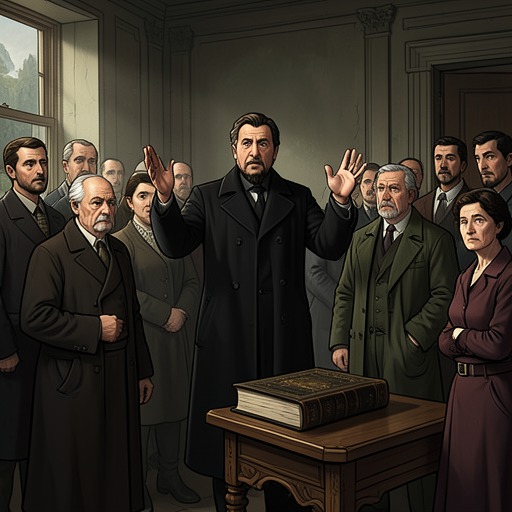
Gardner also placed Ron’s reported revelations in the setting of the School of the Prophets. Ron’s claims might sound like evidence of madness when considered only as an individual saying that God had instructed him. Gardner argued that the group context changed the clinical question: members prayed, read, talked, and weighed together whether revelations were genuine. He regarded that shared process as different from an isolated person experiencing divine speech without a common framework of discussion and judgment.
This argument did not establish that the revelations were true. It addressed how Gardner interpreted them as evidence of mental illness. He presented communal discernment as a religious practice with counterparts in Christian traditions, where people seek to judge whether spiritual experiences come from God. In his account, the presence of a group evaluating a claim distinguished Ron’s experience from the solitary reality he associated with schizophrenia.
Gardner’s conclusion was therefore not that Ron had no psychological affliction. Although he rejected psychosis as the explanation for Ron’s unusual theology, he told the court that Ron exhibited symptoms of Narcissistic Personality Disorder. He introduced the diagnosis as a pattern involving grandiosity, a need for admiration, and lack of empathy, with diagnostic criteria requiring multiple indicators. The distinction left two propositions in view at once: Ron’s idiosyncratic religious beliefs did not, by themselves, establish schizophrenia, and his presentation could still warrant a separate personality-disorder diagnosis.
The Limits of the Testimony
Gardner’s evidence drew a boundary between the unfamiliar and the clinically pathological, but it did not erase the consequences of Ron’s actions or explain them away. His comparisons concerned how a psychiatrist should interpret religious belief, shared revelation, humor, and social behavior when assessing psychosis. By separating those questions from the diagnosis of Narcissistic Personality Disorder, Gardner resisted the notion that one label could stand in for the whole person or serve as a complete account of violence.
The testimony also exposed a tension inherent in evaluating religious experience in court. Beliefs that sound extraordinary to outsiders may have analogues in broader religious traditions, while an individual can still fashion a private theology and remain accountable to clinical assessment. Gardner’s role was to interpret that boundary for the prosecution: not to certify Ron’s revelations, but to explain why their religious vocabulary and group setting did not, in his judgment, make Ron psychotic.